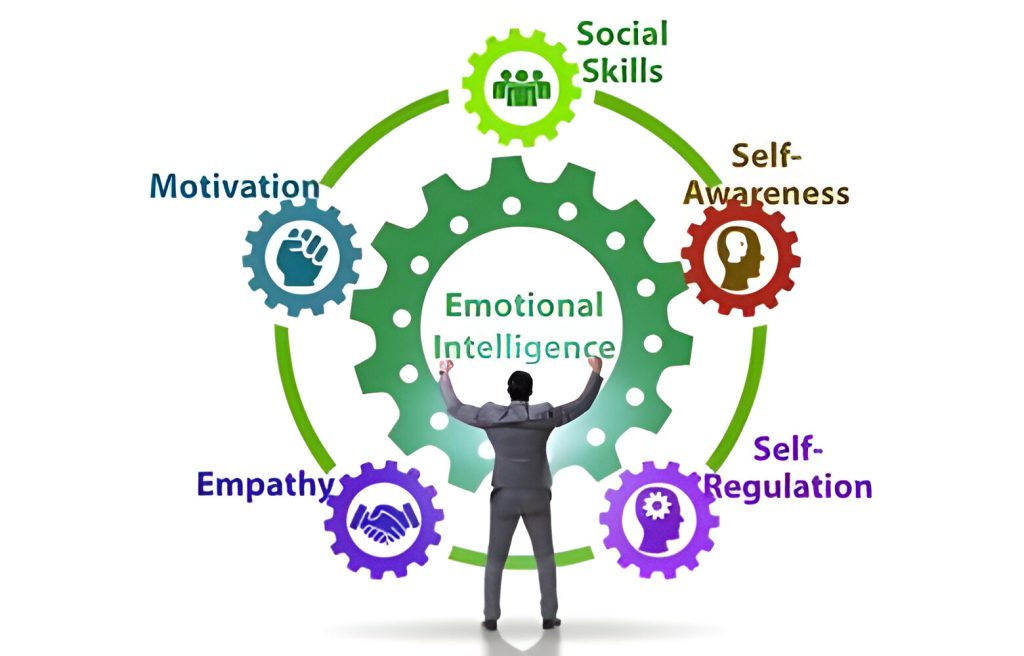
Emotional intelligence (EI) or the emotional intelligence quotient (EQ) measures one’s ability to experience, understand, and effectively regulate his or her emotions and those of others.
While cognitive ability is mainly genetically inherited, emotional intelligence can be learned and improved over time. Self and other research indicates that employees with high levels of emotional intelligence have better mental health, job performance, and leadership skills. This is because EI fosters interpersonal and intrapersonal communication, conflict management, and empathetic understanding which are vital for success in our daily lives.
In the modern world that can be characterized as interconnected and constantly changing, where people interact more and more often and where teamwork becomes a primary focus, emotional intelligence is considered one of the essential components of interpersonal relationships and overall well-being.
What Are The Benefits Of High Emotional Intelligence In The Workplace?
In essence, self-awareness and empathy in the workplace result in improved teamwork, communication, and leadership skills. Hypothesis 1: Employees with high EI will be able to deal with stress, avoid conflict, and promote harmony in the workplace. This leads to improved employee morale, increased output, and reduced staff turnover. Furthermore, high EI leaders can create and encourage positive emotions and engagement among the members of their team, promote idea generation, and attain organizational objectives.
Is It Possible To Learn And Build Up Knowledge Of Emotional Intelligence?
It is therefore clear that emotional intelligence can be trained and improved with time and practice. However, it is important to note that, although some people may possess a higher level of EI than others, it is also possible to develop these skills through practice, such as by participating in activities that encourage self-reflection, as well as the ability to understand and relate to others. For example, by practicing mindfulness meditation, reflective journaling, and active listening exercises, one can enhance their EI skills in the long run.
How Does The Concept Of Emotional Intelligence Impact Decision-Making
Emotional intelligence is a key component of the decision-making process because it allows a person to understand and regulate their emotions that might otherwise interfere with rational thinking. It enables persons with high EI to remain composed, take into consideration various views, and make sound judgments. It also helps them to be aware of how their decisions are going to affect the emotions of other people and thus, make better decisions that are more sensitive to the feelings of others.
How Does Emotional Intelligence Contribute To Mental Health?
Self-awareness and empathy are crucial for understanding oneself and other people, and they have a direct influence on a person’s psychological state. High EI persons can control stress, anxiety, and other negative emotions in a much better way as compared to low EI persons. They can learn about their feelings, know when they require assistance and have better interpersonal connections. This makes them emotionally strong, less prone to depression and anxiety, and hence are likely to have a positive attitude towards life.
How Can Parents Help Their Children Develop Emotional Intelligence?
Here are some tips on how parents can promote emotional intelligence in their children:
Parents should be emotionally intelligent themselves and set a good example;
Parents should provide support to children.
Some of the approaches include: Facilitating the free flow of communication, educating children on how to understand other people’s feelings and points of view, and helping children to learn and label their feelings.
Other interventions like role play, reading of books on emotion, and solving problems also enable children to regulate their emotions and be well-mannered in their dealings with others.