Open · Editorial reflections
What longevity predictions can and cannot tell you
Learn how to read longevity forecasts, distinguish population averages from personal predictions, and use uncertainty thoughtfully when planning for later life.
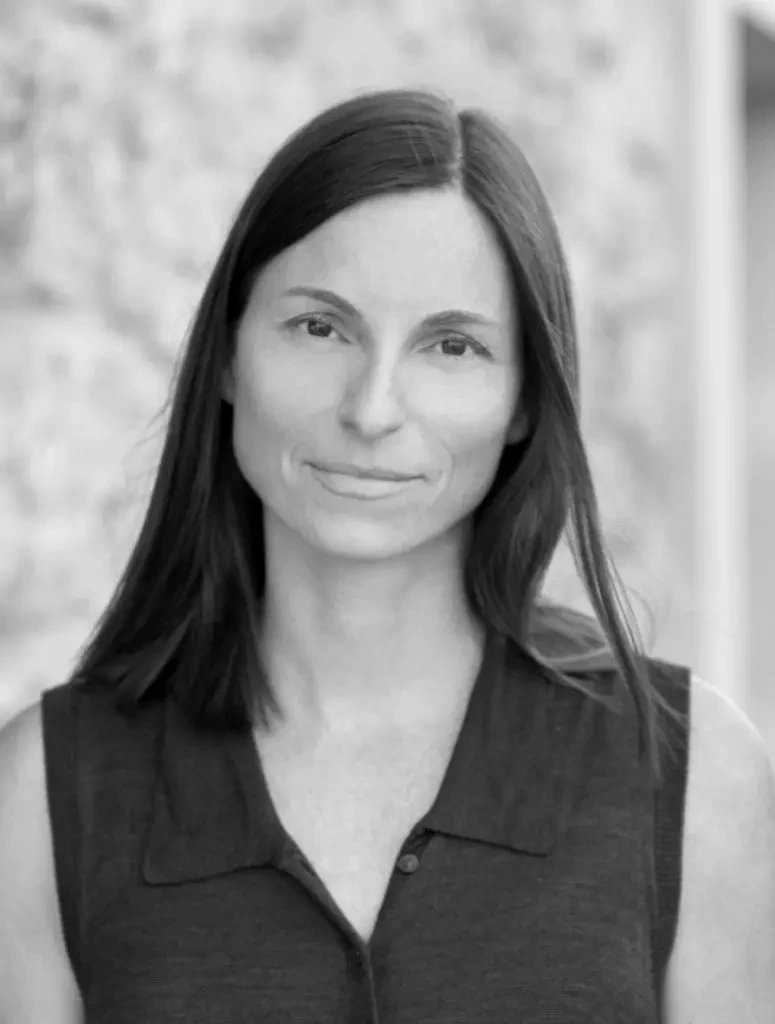
Gemma Argento discusses longevity research and cites Dr. Sarah Boss of THE BALANCE through Emily Retter’s Guardian reporting. This is secondary coverage, not a new interview.
A headline about living to 100 can feel strangely personal. It appears to offer a number around which to organize expectations, plans, and hopes. Yet a population forecast is answering a different question from the one a reader may instinctively ask: how long will I live?
Open author Gemma Argento considers longevity forecasts and cites Dr. Sarah Boss of THE BALANCE through Emily Retter’s reporting in The Guardian. The Italian article is a secondary discussion of those comments, not a new interview with Boss. It also points toward demographic research on future life expectancy.
The useful response is to examine what the numbers measure before applying them to your own life. A forecast can inform a serious conversation about the future without becoming a personal deadline, a promise of exceptional lifespan, or a reason to treat ordinary aging as failure.
Four questions to prepare
Is this number an average, a probability, or a proposed maximum age?
Which population, birth years, and assumptions does the forecast describe?
What would have to be known before applying the claim to my own circumstances?
Which decisions remain useful even when the future cannot be predicted precisely?
Identify the kind of number in the headline
Life expectancy is an average, not a maximum age or a scheduled endpoint for an individual. The Office for National Statistics explains two common approaches: period measures use mortality rates from a particular period, while cohort measures incorporate observed and projected rates across a birth cohort's lifetime.
Those distinctions matter before comparing two numbers. An estimate at birth is also different from an estimate of remaining years at a later age. Check the label, population, and reference year rather than assuming that every figure called life expectancy has been calculated for the same purpose.
Imagine a purely illustrative group whose average lifespan is 85 years. That statement alone does not tell you how many members reach 100, how widely their ages differ, or which member will live longest. Different distributions can share an average. The example demonstrates why one number cannot answer every question about longevity.
When a headline feels dramatic, pause to identify which question it actually answers. Is the discussion about an average across a population, the proportion reaching a milestone, or the possibility of an exceptional individual lifespan? Clear wording prevents a change of meaning from slipping into the interpretation unnoticed.
When sharing a finding with someone else, include the limitation that matters most. Saying that a study projects a population average is more accurate than saying it predicts everyone's future. Preserving that detail helps prevent a careful result from becoming an exaggerated claim.
Read the research question behind the report
The Max Planck account of the underlying research, published in August 2025, describes an analysis of birth cohorts from 1939 to 2000 across 23 high-income, low-mortality countries. Researchers used six forecasting methods. Their estimates suggested slower gains than earlier generations experienced and did not project an average lifespan of 100 for the cohorts studied. Researchers José Andrade, Carlo Giovanni Camarda, and Héctor Pifarré i Arolas examined the trend. Their study appeared in Proceedings of the National Academy of Sciences.
That is a specific population-level result. It does not mean that nobody in those generations will reach 100, and it is not a calculation of the reader's personal lifespan. Keeping the scope visible preserves the finding without turning it into a broader claim than the research supports.
Notice the dates as well. A 2026 media discussion can refer to research published in 2025. The newer article date does not necessarily indicate a new dataset or a newly completed study. Follow the original research link when possible, and distinguish the date of the evidence from the date of the commentary.
Ask what the researchers set out to examine. A study about demographic trends cannot, by itself, determine whether a particular consumer product works or whether one person's daily routine is optimal. Those questions would require different evidence. The connection may be interesting, but it should not be supplied by implication alone.
Look for the assumptions that connect past and future
A projection needs a way to extend beyond what has already been observed. Ask which assumptions perform that work and whether the explanation makes them visible. A confident presentation is less informative than a clear account of how the estimate was produced and where uncertainty enters.
Different methods can be compared to see whether a broad conclusion depends on one particular approach. Agreement can strengthen confidence in that conclusion without converting it into certainty. A set of methods may still face circumstances that have not yet occurred or that were not represented adequately in the information available.
Treat an uncertainty range as information rather than a defect to be hidden. A range acknowledges that more than one future outcome is possible. If a public summary presents only one precise figure, look for the fuller explanation before assuming the number should be interpreted as an exact prediction.
Avoid filling the uncertainty with your preferred story. Optimism about future breakthroughs and pessimism about future problems both need evidence when used to make specific claims. It is possible to remain hopeful while acknowledging that a development has not yet demonstrated the effect being promised. Hope and a quantified forecast have different responsibilities.
Keep population findings in personal perspective
A population average does not contain the full medical circumstances of a particular reader. Your health history, current concerns, and care needs require their own assessment. If a forecast prompts a personal question, take that question to an appropriate professional rather than treating the demographic number as a clinical result.
The distinction also protects against comparisons that become misleading. A person whose experience differs from the average has not necessarily disproved the research. An average is compatible with variation. Likewise, one exceptionally long-lived person does not establish that the same outcome is available to everyone who copies selected details of their routine.
Ask whether the information changes a decision you actually face. If it does, identify what additional expertise is needed. A healthcare question, a financial planning question, and a family conversation about future support should not all be answered by the same headline. Each has different requirements and different consequences.
There is value in admitting that a number is interesting but not directly actionable for you. You can learn from research without immediately changing your schedule, buying a product, or setting a new target age. Not every useful idea needs to become an instruction for individual behavior.
Plan for a life rather than a milestone age
A milestone can organize attention, but it should not become the only measure of a life. Consider what you hope later years will contain: relationships, meaningful activities, appropriate support, and the ability to participate in decisions. These priorities remain relevant across a range of possible lifespans.
Discuss health concerns and preventive care with a qualified clinician who can consider your circumstances. Ask how recommendations relate to function, comfort, or risks that matter to you. The aim is an understandable care plan, not an attempt to guarantee a particular birthday through a collection of increasingly elaborate routines.
Practical planning can also include conversations with people close to you about preferences and support. Choose a suitable time, explain what you want to discuss, and allow the conversation to develop gradually. Uncertainty about timing does not prevent thoughtful preparation for changing needs.
If longevity content is making you feel that every day must be optimized or that aging represents a personal defeat, consider the effect of that message. You can care for future health while allowing present life to contain ordinary pleasures, imperfect days, and activities whose value is not measured by an estimated number of additional years.
Use uncertainty as a reason for thoughtful planning
The practical response to uncertainty is neither to demand an exact answer nor to abandon planning. Ask which decisions are sensible across several plausible futures and which depend on assumptions that need closer review. That approach keeps attention on choices you can understand and revisit.
When reading the next prediction, begin with four checks: what is measured, who is included, which assumptions are used, and what conclusion the evidence can support. Then ask whether the article distinguishes research findings from expert interpretation and personal commentary. Those steps can clarify a story without requiring specialist training in every statistical method.
Revisit important plans when circumstances change, using appropriate professional advice. A forecast can be one input, but it should not take the place of a current assessment or a conversation about your priorities. A plan that can be revised is often more useful than one built around a single apparently definitive number.
Longevity research contributes to understanding how populations may change. Its value does not depend on predicting the final chapter of any individual life. Read the numbers carefully, preserve their limits, and use them to support proportionate decisions that make room for both future needs and the life being lived now.