

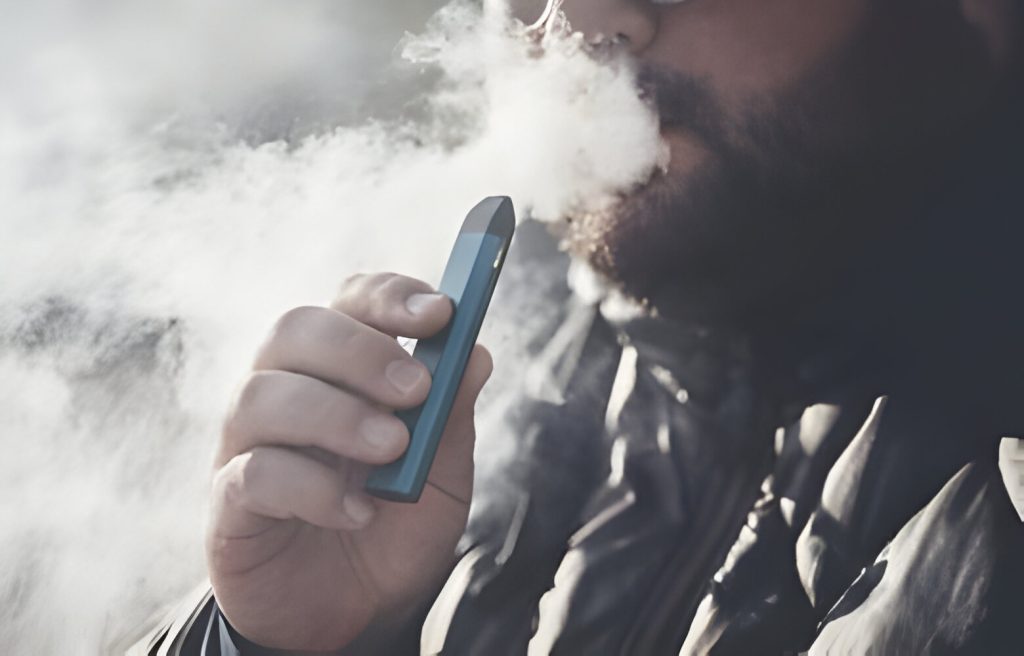
- Vaping devices are known to contain potentially harmful chemicals, albeit in levels generally lower than those found in tobacco cigarettes.
- These substances can cause side effects like throat and mouth irritation, coughing, headache, and nausea.
- Importantly, the long-term health effects of vaping are still under investigation, emphasising a cautious approach to their use, especially among non-smokers and young people.
Vaping in the UK has become a topic of significant public health interest, with debates oscillating between its efficacy as a smoking cessation tool and concerns about its potential health risks.
E-cigarettes, commonly known as vapes, are devices that heat a liquid into a vapour, which is then inhaled. The liquid usually contains nicotine, flavourings, and other chemicals. While e-cigarettes don’t contain tobacco—the primary carcinogen in traditional cigarettes—they are not free from harmful substances.
Various studies and health organizations, including Cancer Research UK, have pointed out that, although vaping is considerably less harmful than smoking, it is not devoid of risks. Vaping devices are known to contain potentially harmful chemicals, albeit in levels generally lower than those found in tobacco cigarettes. These substances can cause side effects like throat and mouth irritation, coughing, headache, and nausea. Importantly, the long-term health effects of vaping are still under investigation, emphasising a cautious approach to their use, especially among non-smokers and young people.
Vaping, the act of inhaling vapour produced by an e-cigarette or similar device, has emerged as a popular alternative to smoking traditional tobacco cigarettes. These devices work by heating a liquid, which typically contains nicotine, propylene glycol, glycerin, and flavourings, to create an aerosol that the user inhales. Despite being marketed as a healthier option than smoking tobacco cigarettes due to the absence of tobacco smoke, vaping is not without its dangers and health risks.
E-cigarettes have been touted as tools to help quit smoking, appealing to those looking to stop smoking tobacco cigarettes. While they contain fewer toxic substances compared to the 7,000 chemicals found in tobacco smoke, they are not risk-free. Vaping still introduces the user to nicotine, a highly addictive substance also found in traditional cigarettes, along with a range of potentially harmful substances including carcinogens like acetaldehyde and formaldehyde, lung disease-causing chemicals such as acrolein, diacetyl, and diethylene glycol, as well as heavy metals like nickel, tin, lead, and cadmium.
The health risks associated with vaping include:
- Lung and organ damage
- Breathing problems
- Addiction
Nicotine, whether inhaled from tobacco smoke or e-cigarette vapour, raises blood pressure and spikes adrenaline, which can increase the risk of having a heart attack. Furthermore, vaping has been linked to chronic lung diseases, asthma, cardiovascular disease, and other severe conditions.
Does vaping help with stopping smoking?
The FDA has not approved e-cigarettes as smoking cessation devices, and studies indicate that individuals who use e-cigarettes to quit smoking often end up using both e-cigarettes and tobacco cigarettes. Moreover, there is concern about e-cigarettes potentially leading non-smokers, particularly youth, to nicotine addiction and subsequently to smoking tobacco cigarettes.
Research is ongoing to fully understand the long-term health effects of vaping. While some studies suggest that vaping might be less harmful than combustible cigarettes for individuals who switch completely from tobacco smoking, nicotine in any form is addictive and can prime the brain’s reward system, increasing the risk of addiction to other drugs. Additionally, vaping exposes the lungs to a variety of chemicals, some of which are known carcinogens and toxic chemicals.
Given the addictive nature of nicotine and the health risks associated with vaping, individuals who do not currently use tobacco products are advised against starting to vape. For those looking to quit smoking, proven smoking cessation methods recommended by health authorities should be considered.
One of the major concerns with vaping is the exposure to potentially harmful chemicals. Research has identified the presence of carcinogens like acetaldehyde and formaldehyde, lung disease-causing agents such as acrolein, diacetyl, and diethylene glycol, and heavy metals like nickel, tin, lead, and cadmium in e-cigarette vapour. Diacetyl, for instance, is linked to a condition known as “popcorn lung” (bronchiolitis obliterans), which causes permanent scarring of the lung’s tiny airways, leading to breathing difficulties.
Moreover, vaping can cause lung and organ damage, breathing problems, and conditions like EVALI (e-cigarette, or vaping, product use-associated lung injury), a severe lung condition that has caused numerous hospitalizations and fatalities.
Symptoms of EVALI include:
- Coughing
- Shortness of breath
- Chest pain
- More severe outcomes like lung collapse and cancer
Recent statistics indicate a significant uptick in vaping among the youth.
- In 2023, 20.5% of children aged 11-17 had tried vaping, marking a considerable increase from 15.8% in 2022.
- The rise in vaping experimentation among children (those trying once or twice) surged by 50% year-on-year, from 7.7% in 2022 to 11.6% in 2023.
- Adult vaping prevalence in England also reflects this trend, with data showing an increase to 8.3% in 2022.
- The increase in vaping is not isolated to any specific demographic but is evident across various age groups and socio-economic statuses. Despite the higher smoking prevalence among adults from more disadvantaged groups, vaping prevalence appears to be lower than smoking across all demographics. Tank models remain the most popular vaping device among adult users.
The health implications of vaping have been extensively reviewed, with findings suggesting that vaping poses a small fraction of the risks of conventional smoking in the short to medium term. However, vaping is not risk-free, particularly for those who have never smoked. The most robust evidence comes from biomarkers of exposure, showing significantly lower exposure to harmful substances from vaping compared to smoking. Despite this, the public perception of vaping’s harm relative to smoking has not fully aligned with scientific findings, highlighting a need for continued education and awareness.
Efforts to address vaping, especially among young people, include enforcing age-of-sale regulations for vaping products and cigarettes. Additionally, the increasing popularity of disposable vaping products among the youth calls for improved regulatory oversight and investigation into the marketing strategies targeting this demographic.
Overall, while vaping offers a less harmful alternative for adult smokers looking to quit smoking, the public health community remains vigilant about the potential risks associated with vaping, especially among young people and non-smokers. Continuous monitoring, research, and regulation are essential to mitigate these risks and prevent the renormalization of smoking behaviours.
Serious concerns have been raised regarding the long-term health effects of vaping. Research links vaping to heart, lung, and neurological injuries, which could cause long-term problems. For instance, chronic users of e-cigarettes may experience impaired blood vessel function, potentially increasing their risk for heart disease. This risk is compounded for individuals who use both e-cigarettes and traditional cigarettes.
As mentioned, one of the most severe vaping-related conditions identified is EVALI (e-cigarette or vaping product use-associated lung injury), characterised by symptoms that can mimic the flu or other respiratory conditions. Patients may require mechanical ventilation to breathe, and there have been fatalities associated with this condition. While the incidence of EVALI peaked in 2019, healthcare providers remain vigilant.
The use of e-cigarettes, particularly among youth, has surged, with flavoured e-cigarette products being particularly appealing. This rise in “youth vaping” has led to concerns about renormalising smoking behaviours and establishing new nicotine dependencies among a demographic that might not otherwise have engaged with tobacco products. The potential for vaping to lead to other serious illnesses, similar to those associated with traditional smoking, won’t be fully understood for decades due to the relatively recent introduction of e-cigarettes into the market.
Ultimately, while vaping may offer a reduction in exposure to the tar and carbon monoxide found in cigarette smoke, it introduces its own set of risks and health effects, including potential damage to the heart, lungs, and blood vessels. Public and healthcare professionals are urged to consider these factors and continue supporting research into the long-term impacts of vaping products.
People vape for a variety of reasons, ranging from attempting to quit smoking to being drawn to the social and competitive aspects of vaping culture. Here are the primary reasons:
- The belief that vaping is a safer alternative to smoking tobacco (due to absence of harmful chemicals produced by burning tobacco in cigarettes)
- The wide array of e-liquid flavours available is another significant draw for many vapers.This variety not only helps ex-smokers transition away from tobacco but also caters to broad tastes.
- Vaping is seen as a way to reduce exposure to harmful chemicals found in cigarette smoke, potentially lowering the risk of developing related health problems. Some people who switch to vaping report improved senses of smell and taste, further enhancing their quality of life.
- In the long term, vaping can be more cost-effective than smoking, appealing to those looking to save money.
However, there risks associated with vaping outweigh the costs, including health risks like lung damage and other respiratory problems. The devices’ batteries can be volatile, posing a risk of exploding and causing injury. Moreover, e-cigarettes contain nicotine, an addictive substance that can lead to dependency, whether users are transitioning from smoking or starting fresh with vaping. The lack of regulation in the vaping industry adds another layer of potential harm, with the possibility of harmful chemicals present in some products.
It’s clear that informed choices are crucial. Understanding the potential harm and benefits can help individuals make decisions that best suit their health and lifestyle needs. Whether used as a tool to quit smoking or for recreational purposes, vaping is a complex phenomenon that requires careful consideration of its effects on health and wellbeing.
The symptoms of nicotine addiction from vaping are primarily physical and emotional.
Withdrawal symptoms
These are a key aspect of nicotine addiction and can vary widely among individuals. Common symptoms include:
- Irritability
- Restlessness
- Sadness
- Anxiety
- Difficulty concentrating
- Intense cravings for e-cigarettes
Physical symptoms
Individuals may experience:
- Headaches
- Fatigue
- Trouble sleeping
- Increased hunger
The severity and combination of these symptoms can make the process of quitting vaping particularly challenging.
Managing nicotine withdrawal requires seeking help from healthcare professionals, staying hydrated, prioritising sleep, and reaching out for support from friends and family.
For those looking to quit, local stop smoking services offer resources and support tailored to help manage the unique challenges posed by vaping and nicotine dependence.
Treatment options for nicotine addiction focus on reducing withdrawal symptoms and helping individuals quit vaping and smoking. These treatments are vital, especially considering the health risks associated with smoking, such as chronic obstructive pulmonary disease, lung cancer, cardiovascular disease, and the harmful chemicals found in tobacco smoke and e-cigarette vapour.
Nicotine Replacement Therapy (NRT)
This is widely used and includes products like gums, patches, inhalers, and lozenges. These products supply the body with nicotine at lower doses than cigarettes, aiming to ease the process of quitting by reducing cravings and withdrawal symptoms.
Prescription medications
Medications such as Bupropion and Varenicline offer additional options. Bupropion works by lowering the brain’s absorption of dopamine and norepinephrine, helping to reduce cravings and the pleasurable effects of nicotine. Varenicline targets nicotine receptors in the brain, reducing cravings and the rewarding effects of smoking. Some studies have found Varenicline to be more effective than NRTs.
Behavioral therapies
These are often recommended alongside NRTs and medications.
Cognitive Behavioral Therapy (CBT): This helps individuals identify triggers and develop coping strategies.
Motivational Interviewing (MI): This addresses ambivalence about quitting, and mindfulness techniques can help manage cravings and emotional responses without relying on nicotine.
Other valuable resources for people trying to quit vaping include:
- Support groups
- Quit lines
- Mobile apps
While these treatments can significantly aid in quitting nicotine, it’s crucial to consult with healthcare providers to determine the most appropriate strategy based on individual needs and health conditions. Support from family, friends, and local stop smoking services can also play a crucial role in successfully quitting nicotine.
Each treatment option has potential side effects, and it’s important to discuss these with healthcare providers. For example, NRTs can cause skin irritation, sleep disturbances, and gastrointestinal issues, among others. Being informed and prepared for these possibilities can help individuals manage their nicotine dependence more effectively.
In conclusion, a combination of NRTs, prescription medications, and behavioral therapies offers a comprehensive approach to treating nicotine addiction. By understanding the available treatments and seeking professional guidance, individuals can find the support they need to quit smoking and vaping, significantly improving their health and quality of life.
Vaping has been surrounded by myths and misconceptions, particularly regarding its comparison with conventional smoking and its health implications.
“Vaping is just as harmful as smoking”
UK experts in 2022 reviewed international evidence and found that vaping poses only a small fraction of the risks of smoking. Unlike cigarettes, which release thousands of harmful chemicals, including tar and carbon monoxide, most of these chemicals are not present in vape aerosol. People who switch from smoking to vaping significantly reduce their exposure to toxins associated with cancer, lung disease, heart disease, and stroke.
“Nicotine, the addictive substance in e-cigarettes, is very harmful to health.”
While nicotine is indeed addictive, it’s relatively harmless in terms of causing diseases like cancer, lung disease, heart disease, or stroke. It’s the other toxic chemicals in tobacco smoke that cause the vast majority of harm from smoking.
“Vaping is a smoking cessation tool”
Another myth is that vaping is the best option for those looking to quit smoking. While some find vaping helpful due to its similarity to the act of smoking, health experts suggest exploring all options, including FDA-approved cessation aids, as e-cigarettes have not been approved as smoking cessation devices by the FDA. Studies show mixed results regarding their effectiveness in helping smokers quit, with some people continuing to use both traditional and e-cigarettes.
“Vaping is completely safe and e-liquids are well-regulated”
Although vaping is considered less harmful than smoking, it is not without risk. The inhalation of propylene glycol and vegetable glycerin, common bases for e-liquids, is generally safe for ingestion but their effects when inhaled are not fully understood. Additionally, some flavourings used in e-liquids are harmful when inhaled, and the industry lacks comprehensive regulations on e-liquid contents, leading to potential exposure to contaminants.
“Vaping is not as appealing to young people as smoking is”
The belief that vaping is not as appealing or harmful to youth is incorrect. E-cigarettes are more popular among youth than traditional tobacco products, with a significant number using flavoured e-cigarettes. This has led to concerns about a new generation becoming addicted to nicotine, which could potentially lead them to traditional tobacco use later on.
“Vaping has no health risks”
Despite some beliefs to the contrary, vaping poses several health risks. It can exacerbate asthma and lead to lung conditions like bronchiolitis obliterans (popcorn lung), caused by certain chemicals in flavourings. Nicotine and other substances in e-liquids can also harm the heart and brain, and there’s a risk of developing EVALI (e-cigarette or vaping product use-associated lung injury), a serious condition linked to vaping.
“E-cigarettes do not contain much nicotine”
Many people underestimate the amount of nicotine in vape products. The nicotine in one small vaping pod can be as much as a whole pack of cigarettes or more, posing a significant risk of nicotine addiction and associated health issues.
Luxury rehab centres are specifically designed for executives grappling with nicotine addiction among other challenges. These centres offer a blend of top-tier medical and therapeutic services, privacy, and an environment that not only facilitates recovery but also caters to the high standards of living that executives are accustomed to. They provide a unique set of advantages, making them an ideal choice for professionals seeking to address their addiction while maintaining their work-life balance and confidentiality.
The unique pressures and stressors of executive roles, such as constant availability, leading large teams, and making impactful decisions, can sometimes lead to substance misuse. For CEOs and high-ranking professionals, the high public and professional scrutiny makes the journey to recovery especially challenging. Luxury rehab centres such as The Balance recognize these unique needs and offer a specialised approach to recovery, emphasising discrete, top-tier treatment that understands and caters to the lifestyle and demands of high-functioning executives.
Luxury rehabs differ significantly from traditional rehab programs. They provide privacy, confidentiality, and high-end amenities, creating a conducive environment for recovery. The privacy and discretion offered are unparalleled, ensuring clients’ participation remains confidential, crucial for high-profile individuals. Additionally, these centres feature work-friendly environments, allowing executives to manage their responsibilities while undergoing treatment. Specialised treatment plans, peer support networks, and a holistic approach to recovery are tailored to address the unique challenges executives face, such as stress management and work-related triggers.
- Smoke Free. How to quit vaping. https://teen.smokefree.gov/quit-vaping/how-to-quit-vaping
- Truth Initiative. Quitting vaping? https://truthinitiative.org/research-resources/quitting-smoking-vaping/quitting-vaping-here-are-5-tips-handling-nicotine
- Ash. Use of e-cigarettes. Use-of-vapes-among-young-people-GB-2023-v2.pdf
FAQs
These answers provide a snapshot of what you need to know about vaping, but remember, the landscape of vaping research is always evolving, so staying informed through credible sources is key.
The Article
About This Article
✔ Medically Reviewed
✔ Evidence-Based Sources
✔ Updated Regularly
✔ Clinically Verified
This article was written by THE BALANCE’s clinical content team and reviewed by a licensed medical or mental health professional (such as an MD, psychiatrist, clinical psychologist, or equivalent). Our reviewers ensure that the information reflects current research, accepted medical guidelines, and best practices in mental health and addiction treatment. THE BALANCE’s medical editors draw on extensive real-world clinical experience supporting individuals in residential, outpatient, and luxury private treatment settings across Europe and internationally.
Editorial Standards & Integrity
THE BALANCE follows strict editorial and clinical review standards to ensure accuracy, balance, and reliability:
- All medical statements rely on authoritative sources such as the WHO, NIMH, APA, NHS, CDC, and SAMHSA
- Statistics use the most recent and reliable research available
- No medical or therapeutic claims are made without clear, verifiable evidence
- Content is reviewed and updated regularly to reflect evolving science, treatment guidelines, and clinical best practices
- Commercial interests do not influence clinical accuracy; all clinical insights are reviewed independently
- Recommendations include context, limitations, and alternatives where appropriate
How We Review Sources
- Our clinical writers and editors rely on:
- Peer-reviewed research and meta-analyses
- National and international treatment guidelines
- Professional bodies and regulatory authorities
- Verified public data from reputable institutions
We do not use anecdotal reports, unverified claims, or commercially biased sources. Every factual claim is supported by established evidence.
Conflicts of Interest
THE BALANCE provides private mental health and addiction treatment services. However, our clinical reviewers ensure that all content remains objective, non-promotional, and balanced. When discussing treatment options, we outline limitations, risks, and alternatives. Our priority is reader safety and informed decision-making.
How to Use This Information Safely
Mental health and addiction conditions are complex and vary significantly between individuals. The information in this article is provided for general educational purposes only and should not replace professional medical advice, diagnosis, or treatment. If you or someone you know is experiencing symptoms, seek guidance from a qualified healthcare professional. To maintain accuracy and trust, THE BALANCE updates articles regularly as new research and clinical guidance become available.
Do you need help?
If you’re struggling, you don’t have to handle it alone. Support is available - whether you’re feeling overwhelmed, anxious, depressed, or dealing with alcohol or drug-related concerns. If you feel unsafe, are at risk of harming yourself, or someone else is in immediate danger, contact your local emergency number immediately.
Talk to Someone Now (Free & Confidential)
Choose your country to find a trusted helpline near you:
Spain
- Suicide & emotional crisis helpline: 024 (24/7, free, multilingual)
- Samaritans in Spain: 900 525 100 (24/7)
Switzerland
- Die Dargebotene Hand / La Main Tendue: 143 (24/7)
- Pro Juventute (youth): 147
United Kingdom
- Samaritans: 116 123 (24/7, free)
- NHS urgent mental health support: call 111 (24/7)
United States
- 988 Suicide & Crisis Lifeline — call, text, or chat 988 (24/7)
Canada
- 9-8-8 Suicide Crisis Helpline — call or text 988 (24/7, nationwide)
- Talk Suicide Canada (alternate): 1-833-456-4566
France
- National suicide prevention number: 3114 (24/7, free)
Germany
- TelefonSeelsorge: 116 123
- Alternate numbers: 0800 111 0 111 / 0800 111 0 222
Italy
- Telefono Amico Italia: 800 860 022 or 02 2327 2327
Not an Emergency, but You Want Support?
If you’re not in immediate danger but are worried about yourself or someone you care about, reaching out early can make a meaningful difference.
Explore Care Options Near You
This website lists verified mental health professionals, addiction specialists, and treatment programs searchable by country and location. Use the “Find treatment” / “Providers” section to explore available options.
Or Reach Out to Us
If you’d like help understanding next steps, you can contact our team confidentially. We’ll listen without judgment and help you explore appropriate options.
Contact our team
- Phone: +41445005111
- Email: help@thebalance.clinic
- Availability: Mon–Sun, 07:00–22:00 CET
Not sure what to say? You can simply write: “I need help.” We’ll take it from there.

