
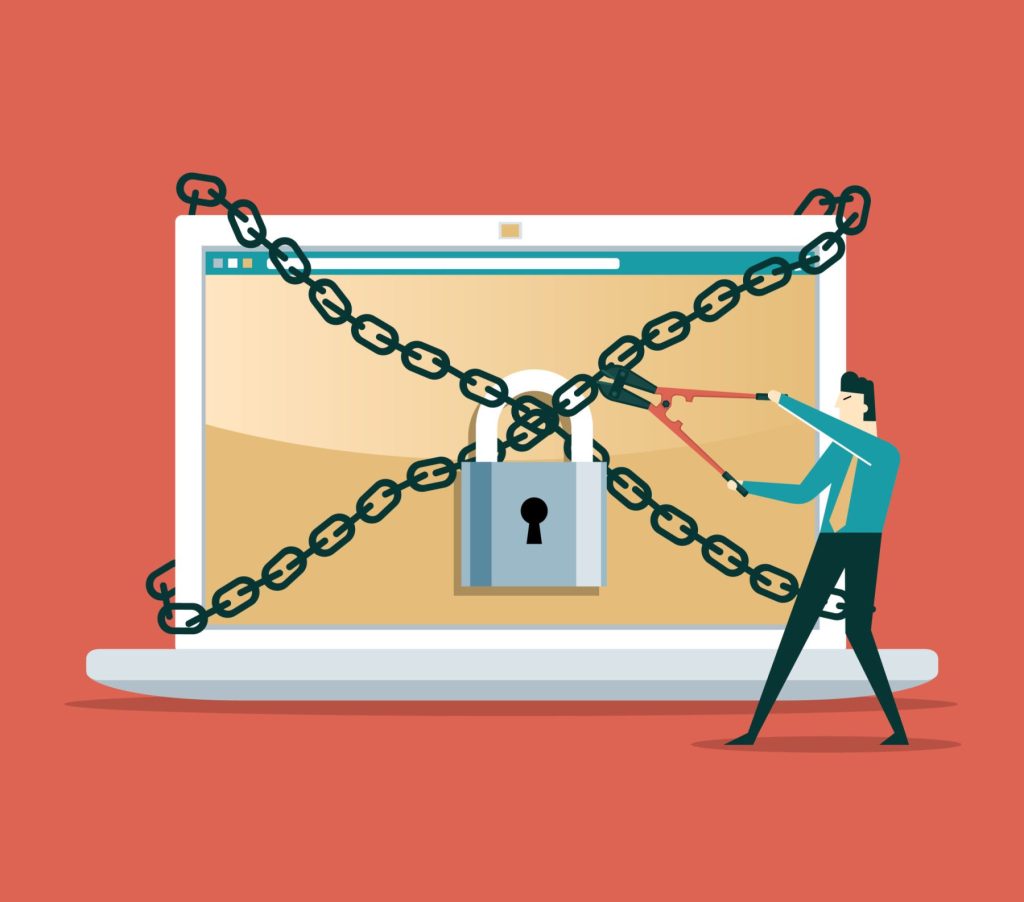
- Are you tired of spending a lot of time on the Internet yet can't stop yourself?
- Do you realize what you're doing at a certain moment and what you should do instead, but you fall in and do something more gratifying right away?
- Do you find that key responsibilities that other people enjoy aren't your cup of tea?
Are you tired of spending a lot of time on the Internet yet can’t stop yourself?
Is it no longer fun? Do you realize what you’re doing at a certain moment and what you should do instead, but you fall in and do something more gratifying right away?
Do you find that key responsibilities that other people enjoy aren’t your cup of tea? These are symptoms that you need to detox from dopamine. But what exactly is dopamine detox?
The actual dopamine detox appears to be a useful guideline for good digital behaviors, but we don’t believe it will be enough to re-establish good surfing habits and overcome internet addiction. It’s merely a good avenue of grabbing our attention.
Nevertheless, there is a proper way to accomplish it, and that is the subject of this article.
Dopamine is a neurotransmitter that is found in the brain. It is a chemical messenger created naturally by the body that has an impact on a variety of behavioral and physical activities, including:
- Sleep
- Learning
- Motivation
- Attention
- Mood
Dopamine production can be excessive or deficient, resulting in mental health problems. Such disorders can be triggered by excessive amounts of stimulation, which can develop into addictions to certain activities or substances. (source: NIDA, 2020)
Other effects of dopamine on the body include:
- Mood regulation: A lack of dopamine can lead to depression. Meanwhile, some studies have discovered that too much dopamine might lead to mania.
- Slows or decreases the production of prolactin: Prolactin is important in both sexual enjoyment and lactation.
- Regulation of Sleep: Dopamine contributes to wakefulness by inhibiting the generation of melatonin toward the conclusion of a night’s sleep.
- Regulates attention and memory: Dopamine has been linked to attention, cognition, and memory in numerous studies. Schizophrenia and attention deficit hyperactivity disorder (ADHD), for instance, has been linked to dopamine disruptions.
- Promotes goal-oriented behavior: Dopamine may reduce inhibition in addition to enhancing reward and goal-directed activity.
A dopamine detox involves abstaining from dopamine-producing activities, or “pleasures,” for a set period of time in order to reduce reward sensitivity. This strategy, however, is not backed up by scientific data.
Those who try a dopamine detox want to disconnect from daily stimulants like sugar, social media, and shopping. They are replaced by lifestyle choices and habits that are less impulsive. Fasting can last anything from a few hours to several days.
It is critical to remember that a dopamine detox is not a clinically validated treatment option. Any benefits are based on anecdotal evidence, and the majority of them come from abstaining from potentially addictive behaviors. However, they have nothing to do with dopamine detoxification.
The dopamine fast, often known as a detox, was created by Dr. Cameron Sepah. In his therapy practice, he frequently employs the technique on IT employees and venture investors. Dr. Sepah’s goal is to help his clients become less reliant on stimuli like phone alerts, SMS, and social media alerts. He based a majority of his studies on cognitive behavioral therapy when it came to this new practice. What he was attempting with this concept was not the same as what people have come to perceive as “dopamine detox.”
Dr. Sepah’s “detox” is based on the idea that instead of looking for quick “hits” of dopamine, people should allow themselves to be bored or lonely, or try simpler hobbies. People should, in theory, begin to realize how particular stimuli can cause them to become distracted.
The dopamine detox, according to Dr. Sepah, tackles six compulsive tendencies or behaviors: (source: NIMH, 2024)
- Emotional eating
- Gaming and excessive internet usage
- Shopping and gambling
- Masturbation and pornography
- Seeking thrills and novelties
- Drugs used for fun
People become less reliant on the emotional “hits” that dopamine offers when they abstain from certain behaviors that stimulate the brain’s neurotransmitters, which can sometimes result in addiction or dependence.
There are several reasons why you might wish to go on dopamine fast:
- You are dissatisfied with how you spend your time.
- You can’t stop yourself from surfing the internet.
- You want to make mundane tasks more engaging and enjoyable
- There are several reasons for this, but the overall goal is the same:
- Have a better relationship with the Internet, phone, and the digital world in general.
Doing a dopamine detox entails stopping the compulsive cycle and acting to change an unhealthy desire. This allows you to take a breather, establish a better life, and, if you work hard enough, learn to better manage your emotions.
To live a more organized and controlled life, the following are some of the dopamine detox rules for undergoing dopamine cleanse:
1. Limit or eliminate activities that make you feel like a zombie.
Here’s a rule of thumb for you: take out things that make you go into Zombie Mode for the length of the challenge. (source: APA, 2019)
Remove any distracting factors.
When you’re in Zombie Mode, you’re watching, scrolling, or playing for hours on end, not actually enjoying it but unable to stop or do anything productive. It’s when you become trapped in cheap dopamine activities for hours on end. The following are the most common offenders:
- Use of social media
- Aggregators of content (YouTube, Hackernews, Reddit)
- Twitch
- Netflix binge-watching
- Computer and video games
- Porn
- Combination of all of the preceding, jumping from one to the next
You know what you’re good at. You may find yourself rationalizing that you don’t need to stop doing these things, that if you just control yourself a little better, everything would be OK. You may give it a shot. However, this is frequently used as a justification because:
You wouldn’t have the problem in the first place if you could control your actions. Also, because these activities are frequently linked, even if your primary concern is YouTube, opening social media frequently leads you to YouTube.
Furthermore, it is extremely difficult to manage your behavior when your dopamine receptors are depleted, which is one of the purposes of the dopamine detox – to reestablish the ability to do so.
How to Stop Doing Things That Make You Addictive
Distracting apps should be deleted from your phone, and distracting websites should be blocked in your browser. Take a few harsh measures, and when your brain tells you that you need to watch Twitch in the night because <insert random excuse here>, tell it that you can return to it once your dopamine detox is complete. (source: NIDA, 2024)
What about tasks that are necessary but also contribute to compulsive behavior (such as email checking)?
Set up a set time during the day and how long you will allow yourself to do this. For instance, you can check email for 15 minutes at 10 a.m. and then again at 4 p.m.
You can also begin a dopamine detox counter to keep track of how far you’ve come. It might be as simple as counting down from 0 on a piece of paper how many days you have been after observing your new regimen.
2. Participate in real-world activities
The next problem is what to do on a dopamine detox once you’ve eliminated addictive distractions. You don’t want to do anything except sit around. It’s simpler to run towards anything than it is to run away from it.
You’ll most likely relapse if you don’t try to develop a more satisfying life without the Internet and if you don’t address the underlying causes that lead to obsessive technology use. In no time, you will be back to your old behaviors. What exactly do we mean when we say “a more satisfying life”? You can engage in things that will make you feel better afterward.
Detoxing dopamine in a healthy way: (source: MedlinePlus, 2024)
- Interacting with others
- Cooking and consuming
- Taking strolls
- Reading literature or books
- Journalling
- Exercising
You’ll note that all of these hobbies have one thing in common: they take you away from your computer or phone. They’re also all examples of what we refer to as “pursue high-quality leisure.”
Be explicit on how you can make better use of your time. Consider this: when you’re bored, what are some simple tasks you could do?
Drawing? Tidying? Reading? Journalling?
This is also an excellent time to try something new: enroll in a salsa dancing class, begin origami, and learn to play the flute. Make an interest that has previously been passive active.
It’s a good idea to develop a concrete list of these activities. When you peek at a physical list on your refrigerator or on your door throughout the day, it will remind you of good methods to fill your time.
Because the activities listed above may not occupy the bulk of your spare time, you may want to return to activities you abandoned or never began because of the Internet – music instruments, drawing, etc. (source: NIMH, 2024 (Depression))
- Learn new skills
- Find new interests
- It is preferable to be out and about.
- Look for a healthy talk group to join.
By adopting any of the above, you have the option of choosing your addiction.
The options are unlimited, so don’t overthink it and just try things out and see what might be enjoyable. Completing the statement “I’ve always wished to do but I never had the opportunity or time” is a fantastic method to find potentially intriguing interests. You will also have the time if you undergo a dopamine detox.
3. Only consume long-form content
This is where the discussion becomes contentious because traditional “dopamine fasters” would consider long-form content to be dopamine-dense. However, we’re here for the long haul, and to live like a monk will make it tough to stick to the schedule.
The majority of people are unable to work full-time (even though ‘work’ has a subjective meaning for each one of us). People strive to fill their leisure time (which they waste foolishly) with constructive activities, but this is unrealistic.
We require rest periods and time when we are not required to think about work. Even if you begin to pursue more conscious leisure, you may become exhausted if you do it on a regular basis.
Because thoughtless activities are what got you into problems in the first place, you don’t want to perform them again. Rather, choose high-quality content that can be consumed slowly: long-form content. (source: Psychiatry.org, 2023)
Books and audiobooks are excellent options. It’s fantastic to play board games with pals in person. It’s good to watch one movie without any interruptions. It’s not binge-watching a Netflix show while looking through your phone.
It’s fine to listen to music as your sole source of entertainment. Having it running in the background all the time isn’t.
We discussed the differences between Netflix, TV, and going to the movies. Compulsivity is less likely with long-form content.
The issue with high-dopaminergic activities is as follows: Dopamine motivates you to do things that increase your dopamine levels.
A number of elements combine to make a behavior dopamine-rich:
- Stimulation time
- The dopamine rush you experience from engaging in the behavior
- Stimulation intensity
- Novelty
Of course, it’s difficult to quantify this on an individual basis; nonetheless, if you think about it for a second, you might be able to estimate it. (source: StatPearls, 2024)
Drugs cause a huge increase and have a ridiculously high stimulation strength. Video games have a lot of power and may provide practically nonstop pleasure for a long time. Pornography is both fascinating and new. When compared to longer-form content like a movie, the duration of stimulation is longer, but the intensity is not.
Dopamine is a joyful, happy, or pleasurable hormone produced by the brain in reaction to a pleasant event. Dopamine is a neurotransmitter that we crave without even realizing it. Most of the time, the secretion of Dopamine hormone in our system causes us to feel happy for a variety of reasons. The “pleasure-giving hormone” dopamine detox is a type of abstinence or fasting from it (Dopamine).
Let’s take a look at the various benefits of dopamine detox.
1. Self-discipline is a form of liberation.
That the more organized and disciplined you are, the more self-reliant you will be. They appear to be diametrically opposed, but they’re actually joined at the hip.
2. Get rid of your comfort-seeking behavior
Your comfort zone will be reduced to the level of a microwave in your quest for dopamine. Dopamine is being used to mask the pain of today’s pleasure-seeking population. (source: ClinicalTrials.gov, 2025)
3. Concentrate on the long-term goals
We’ve all been conditioned to think in terms of the short term. However, if you can break free from this paradigm, you will triumph.
4. Boosts creativity
If you are rarely alone with your thoughts, you will never be able to produce anything. Your ability to see things clearly is a strength. If you eat a lot, you never know what you are going to get. To achieve greatness, you must spend time alone with your thoughts. You will be shocked at what you are capable of if you allow your brain some time to implement rather than absorb.
5. Control your impulses before they consume you.
Whatever pleasure you obtain will only last for a short time, but the pain you will experience afterward will last for a long time. As a result, a person must reduce their addiction before it becomes lethal.
FAQs
30 days is long enough to notice changes and is a reasonable length of time for a monthly challenge. This is the path we recommend.
The average length of time for Internet addiction treatment is 12 weeks (which is also close to the famous 90-day or 100-days challenge). This is usually long enough to change your life, yet it can be intimidating for some people.
The Article
About This Article
✔ Medically Reviewed
✔ Evidence-Based Sources
✔ Updated Regularly
✔ Clinically Verified
This article was written by THE BALANCE’s clinical content team and reviewed by a licensed medical or mental health professional (such as an MD, psychiatrist, clinical psychologist, or equivalent). Our reviewers ensure that the information reflects current research, accepted medical guidelines, and best practices in mental health and addiction treatment. THE BALANCE’s medical editors draw on extensive real-world clinical experience supporting individuals in residential, outpatient, and luxury private treatment settings across Europe and internationally.
Editorial Standards & Integrity
THE BALANCE follows strict editorial and clinical review standards to ensure accuracy, balance, and reliability:
- All medical statements rely on authoritative sources such as the WHO, NIMH, APA, NHS, CDC, and SAMHSA
- Statistics use the most recent and reliable research available
- No medical or therapeutic claims are made without clear, verifiable evidence
- Content is reviewed and updated regularly to reflect evolving science, treatment guidelines, and clinical best practices
- Commercial interests do not influence clinical accuracy; all clinical insights are reviewed independently
- Recommendations include context, limitations, and alternatives where appropriate
How We Review Sources
- Our clinical writers and editors rely on:
- Peer-reviewed research and meta-analyses
- National and international treatment guidelines
- Professional bodies and regulatory authorities
- Verified public data from reputable institutions
We do not use anecdotal reports, unverified claims, or commercially biased sources. Every factual claim is supported by established evidence.
Conflicts of Interest
THE BALANCE provides private mental health and addiction treatment services. However, our clinical reviewers ensure that all content remains objective, non-promotional, and balanced. When discussing treatment options, we outline limitations, risks, and alternatives. Our priority is reader safety and informed decision-making.
How to Use This Information Safely
Mental health and addiction conditions are complex and vary significantly between individuals. The information in this article is provided for general educational purposes only and should not replace professional medical advice, diagnosis, or treatment. If you or someone you know is experiencing symptoms, seek guidance from a qualified healthcare professional. To maintain accuracy and trust, THE BALANCE updates articles regularly as new research and clinical guidance become available.
Do you need help?
If you’re struggling, you don’t have to handle it alone. Support is available - whether you’re feeling overwhelmed, anxious, depressed, or dealing with alcohol or drug-related concerns. If you feel unsafe, are at risk of harming yourself, or someone else is in immediate danger, contact your local emergency number immediately.
Talk to Someone Now (Free & Confidential)
Choose your country to find a trusted helpline near you:
Spain
- Suicide & emotional crisis helpline: 024 (24/7, free, multilingual)
- Samaritans in Spain: 900 525 100 (24/7)
Switzerland
- Die Dargebotene Hand / La Main Tendue: 143 (24/7)
- Pro Juventute (youth): 147
United Kingdom
- Samaritans: 116 123 (24/7, free)
- NHS urgent mental health support: call 111 (24/7)
United States
- 988 Suicide & Crisis Lifeline — call, text, or chat 988 (24/7)
Canada
- 9-8-8 Suicide Crisis Helpline — call or text 988 (24/7, nationwide)
- Talk Suicide Canada (alternate): 1-833-456-4566
France
- National suicide prevention number: 3114 (24/7, free)
Germany
- TelefonSeelsorge: 116 123
- Alternate numbers: 0800 111 0 111 / 0800 111 0 222
Italy
- Telefono Amico Italia: 800 860 022 or 02 2327 2327
Not an Emergency, but You Want Support?
If you’re not in immediate danger but are worried about yourself or someone you care about, reaching out early can make a meaningful difference.
Explore Care Options Near You
This website lists verified mental health professionals, addiction specialists, and treatment programs searchable by country and location. Use the “Find treatment” / “Providers” section to explore available options.
Or Reach Out to Us
If you’d like help understanding next steps, you can contact our team confidentially. We’ll listen without judgment and help you explore appropriate options.
Contact our team
- Phone: +41445005111
- Email: help@thebalance.clinic
- Availability: Mon–Sun, 07:00–22:00 CET
Not sure what to say? You can simply write: “I need help.” We’ll take it from there.