

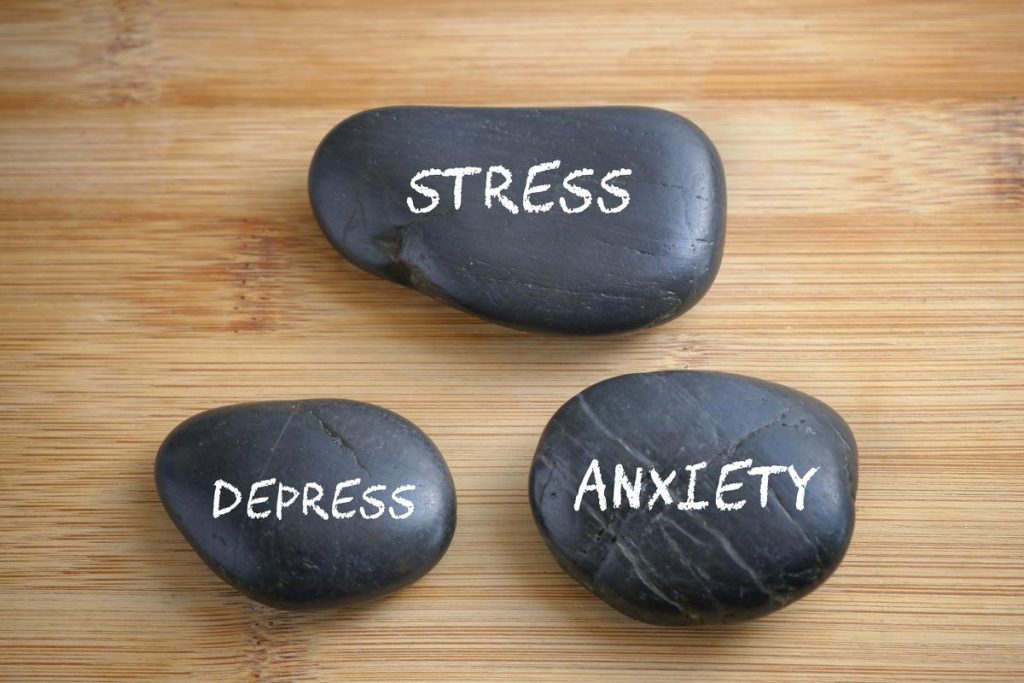
- According to the stats, one out of four people in the UK goes through mental health problems, and among these anxiety and depression are the most common mental health issues.
- You might have come across with terms anxiety and depression frequently in your daily life and possibly used them alongside each other.
- But despite sharing similarities both anxiety and depression are completely different conditions.
According to the stats, one out of four people in the UK goes through mental health problems, and among these anxiety and depression are the most common mental health issues. You might have come across with terms anxiety and depression frequently in your daily life and possibly used them alongside each other. But despite sharing similarities both anxiety and depression are completely different conditions. Do you understand anxiety and depression well? And, know the key differences and similarities both conditions share? If not, then don’t worry this article is meant to guide you in this respect. You’ll get to know the information you’ve been looking for on anxiety VS. depression.
Generally speaking, both anxiety and depression are general emotions. We routinely experience them. For example, you become anxious in response to a high-stake or potentially dangerous situation and you feel depressed after disappointing or upsetting circumstances. Whereas, both can turn into disorders (i.e anxiety disorders and mood disorders) when high in intensity and frequent in occurrence. When anxiety and mood problems reach a threshold for clinical diagnosis they are marked as mental illnesses because they affect the well-being and daily life of an individual. (source: NHS, 2022)
How Does Depression Affect the Brain? (source: NIMH, 2024)
Clinical depression and anxiety have several underlying causes/etiological factors. For example, they can have a biological base such as changes in neurotransmitter function like low serotonin levels, along with other brain chemicals like dopamine and epinephrine. Not only this, causes of clinical depression and anxiety can also be associated with traumas and other psychological vulnerabilities. (source: NIMH, 2024 (Anxiety))
If you ever experienced anxiety or depression, that is meant clinical anxiety or depression disorder you’ll know that they are very different. Yet they tend to go together and a lot of medications, especially certain types of antidepressants, can be used to treat both. Over time psychologists have realized that these two types of conditions are surprisingly similar. They feel very different at the moment, but they actually have a lot of symptoms in common and involve very similar thought patterns. The following points create some link between anxiety and depression;
- Depression and anxiety aren’t specific disorders they are generic terms for types of disorders. The most common and most closely linked are major depressive disorder, or MDD, and Generalized anxiety disorder or GAD.
- Lots of people have both anxiety and depression. About ⅔ of people with major depression also have some kind of anxiety disorder, and about ⅔ of people with GAD have depression.
- Very often same medications are used to treat both anxiety and depression especially antidepressants.
- Symptoms like restlessness, fatigue, irritability, problems with concentration, and sleep disturbances can be seen in both conditions.
- Our body has “flight and fight” responses to any triggering or stressful situation. So, anxiety and depression are just different types of flight. Anxiety is characterized as a sense of helplessness, and depression as a sense of hopelessness.
- There are a lot of hormones involved in these responses, and their effects interact in super complex ways. Both depression and anxiety are closely associated with an oversensitive stress response system. The main hormones involved aren’t always the same, but the changes can cause some of the same symptoms, So both conditions seem to be two sides of a similar reaction to stress
- Many researchers identify the neurotransmitter serotonin as a major factor in both anxiety and depression. Researchers have even identified some more specific cellular receptors that seem to be involved in both. There’s also some evidence that the way the brain handles another neurotransmitter norepinephrine can be similar in both anxiety and depression.
Knowing about the similarities of both conditions may raise a question in your mind that are depression and anxiety the same? The answer is no. Despite sharing similar natures they are completely different entities. Both conditions have separate sub-types and distinct symptoms, except the few that overlap. Below is an overview of the differences between both conditions. (source: WHO, 2023)
| Depression | Anxiety |
|---|---|
| Depression is a mood disorder | Anxiety is its own class of conditions |
| Despair and sadness are prominent characteristics. | An overabundance of anxiety or stress is linked to the belief that a negative occurrence or outcome is inescapable. |
| People who are depressed move slowly and have flattened or muted reactions. | People who suffer from anxiety are more agitated because they are unable to control their racing thoughts. |
| They could be able to foresee the future depending on how they are feeling right now. | In persons with anxiety, there is a fear of the future. |
Because signs of mental illness aren’t always obvious anxiety and depression have a tendency to dismiss. However, we need to know the symptoms of both conditions to detect the early sign and get help as soon as possible. (source: NICE, 2022 (GAD))
Signs of anxiety
- The excessive worry with regard to immediate or long-term future.
- Have uncontrollable, racing thoughts about something going wrong.
- Avoid situations that could cause anxiety so that feelings and thoughts don’t become overwhelming.
- Physical symptoms like shortening of breath, sweating, and trembling.
Depending on the nature and types of the anxiety, these symptoms can differ. For example, someone with a generalized anxiety disorder may feel anxious about a variety of events, or activities. A person with social anxiety or social phobia disorder (SAD), is more apt to fear rejection by others and to be apprehensive about meeting new people or other socially challenging situations. (source: NICE, 2022 (Depression))
Summarizing this, people with anxiety are mentally preoccupied with worry that is disproportionate to actual risk or reality. (source: MedlinePlus, 2024 (Depression))
Signs of Depression
- Hopelessness, a person assumes that nothing positive will happen in the future for themselves, for others, or for the world.
- Develop a belief that it is not worth trying to think or feel differently.
- Feel worthless, as if who they are or what they do is not valuable.
People with depression often think that life is not worth living or that they are a burden on others. Even suicidal thoughts can be present in cases of moderate to severe depression.
A psychiatrist or psychologist can diagnose anxiety and depression. These professionals make diagnoses based on the criteria present in the mental illnesses book called “Diagnostic and statistical manual of mental health disorder”. If you’ve experienced symptoms present in the criteria most days for more than six months, and they cause distress in your daily life, then you may receive a diagnosis of your condition(depression or anxiety). (source: MedlinePlus, 2024 (Anxiety))
Best Foods that Helps to Reduce Anxiety (source: APA, 2023)
Psychologists not only follow the diagnostic criteria they will also perform several assessments to measure the intensity of symptoms. The psychological assessments used for depression and anxiety are; (source: NHS, 2023 (SSRIs))
- Beck Depression Inventory (BDI)
- Center for Epidemiologic Studies Depression Scale (CES-D)
- Hamilton Depression Rating Scale (HAM-D)
- Depression Anxiety Stress Scales – DASS-21 (LINK)
- Hamilton Anxiety Rating Scale – HARS (LINK)
- Overall Anxiety Severity and Impairment Scale – OASIS (LINK)
Anxiety and depression are both debilitating conditions. If you or your loved one has early symptoms consult a mental health professional. Only mental health professionals can help you with these conditions. Also, with proper intervention and care, you overcome and defeat these conditions.
FAQs
The Article
References
- National Health Service. (2022). Generalised anxiety disorder in adults. https://www.nhs.uk/mental-health/conditions/generalised-anxiety-disorder/overview/ [nhs.uk]
- Bandelow, B., & Michaelis, S. (2015). Epidemiology of anxiety disorders in the 21st century. Dialogues in Clinical Neuroscience. https://www.ncbi.nlm.nih.gov/pmc/articles/PMC4610617/ [ncbi.nlm.nih.gov]
- Furukawa, T. A., Cipriani, A., Cowen, P. J., Leucht, S., Egger, M., & Salanti, G. (2019). Comparative efficacy and acceptability of first-line drugs for acute treatment of major depressive disorder: A systematic review and network meta-analysis. The Lancet. https://www.thelancet.com/journals/lancet/article/PIIS0140-6736(19)30110-8/fulltext [thelancet.com]
About This Article
✔ Medically Reviewed
✔ Evidence-Based Sources
✔ Updated Regularly
✔ Clinically Verified
This article was written by THE BALANCE’s clinical content team and reviewed by a licensed medical or mental health professional (such as an MD, psychiatrist, clinical psychologist, or equivalent). Our reviewers ensure that the information reflects current research, accepted medical guidelines, and best practices in mental health and addiction treatment. THE BALANCE’s medical editors draw on extensive real-world clinical experience supporting individuals in residential, outpatient, and luxury private treatment settings across Europe and internationally.
Editorial Standards & Integrity
THE BALANCE follows strict editorial and clinical review standards to ensure accuracy, balance, and reliability:
- All medical statements rely on authoritative sources such as the WHO, NIMH, APA, NHS, CDC, and SAMHSA
- Statistics use the most recent and reliable research available
- No medical or therapeutic claims are made without clear, verifiable evidence
- Content is reviewed and updated regularly to reflect evolving science, treatment guidelines, and clinical best practices
- Commercial interests do not influence clinical accuracy; all clinical insights are reviewed independently
- Recommendations include context, limitations, and alternatives where appropriate
How We Review Sources
- Our clinical writers and editors rely on:
- Peer-reviewed research and meta-analyses
- National and international treatment guidelines
- Professional bodies and regulatory authorities
- Verified public data from reputable institutions
We do not use anecdotal reports, unverified claims, or commercially biased sources. Every factual claim is supported by established evidence.
Conflicts of Interest
THE BALANCE provides private mental health and addiction treatment services. However, our clinical reviewers ensure that all content remains objective, non-promotional, and balanced. When discussing treatment options, we outline limitations, risks, and alternatives. Our priority is reader safety and informed decision-making.
How to Use This Information Safely
Mental health and addiction conditions are complex and vary significantly between individuals. The information in this article is provided for general educational purposes only and should not replace professional medical advice, diagnosis, or treatment. If you or someone you know is experiencing symptoms, seek guidance from a qualified healthcare professional. To maintain accuracy and trust, THE BALANCE updates articles regularly as new research and clinical guidance become available.
Do you need help?
If you’re struggling, you don’t have to handle it alone. Support is available - whether you’re feeling overwhelmed, anxious, depressed, or dealing with alcohol or drug-related concerns. If you feel unsafe, are at risk of harming yourself, or someone else is in immediate danger, contact your local emergency number immediately.
Talk to Someone Now (Free & Confidential)
Choose your country to find a trusted helpline near you:
Spain
- Suicide & emotional crisis helpline: 024 (24/7, free, multilingual)
- Samaritans in Spain: 900 525 100 (24/7)
Switzerland
- Die Dargebotene Hand / La Main Tendue: 143 (24/7)
- Pro Juventute (youth): 147
United Kingdom
- Samaritans: 116 123 (24/7, free)
- NHS urgent mental health support: call 111 (24/7)
United States
- 988 Suicide & Crisis Lifeline — call, text, or chat 988 (24/7)
Canada
- 9-8-8 Suicide Crisis Helpline — call or text 988 (24/7, nationwide)
- Talk Suicide Canada (alternate): 1-833-456-4566
France
- National suicide prevention number: 3114 (24/7, free)
Germany
- TelefonSeelsorge: 116 123
- Alternate numbers: 0800 111 0 111 / 0800 111 0 222
Italy
- Telefono Amico Italia: 800 860 022 or 02 2327 2327
Not an Emergency, but You Want Support?
If you’re not in immediate danger but are worried about yourself or someone you care about, reaching out early can make a meaningful difference.
Explore Care Options Near You
This website lists verified mental health professionals, addiction specialists, and treatment programs searchable by country and location. Use the “Find treatment” / “Providers” section to explore available options.
Or Reach Out to Us
If you’d like help understanding next steps, you can contact our team confidentially. We’ll listen without judgment and help you explore appropriate options.
Contact our team
- Phone: +41445005111
- Email: help@thebalance.clinic
- Availability: Mon–Sun, 07:00–22:00 CET
Not sure what to say? You can simply write: “I need help.” We’ll take it from there.

